Free shipping from £25

Written by students, perfected by teachers

Start revising straight away in our app

All-in-one revision and practice

How to plan AQA English Language Paper 1 Question 5
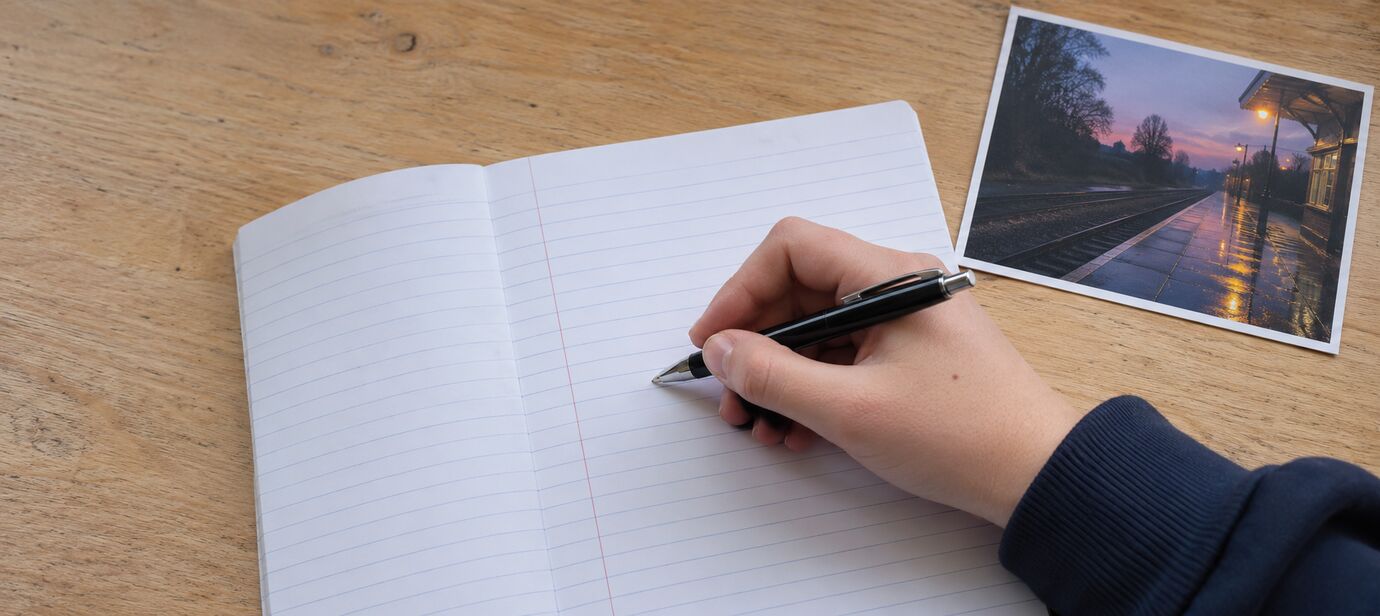
Question 5 is the creative writing task in Section B of AQA GCSE English Language Paper 1. You choose between a description and the opening of a story. For the description, AQA gives you a picture to help you think of details. You’ll use our picture of a station’s lost-property office to try both options, with a three-step plan and a worked example for each.

A hand holds a pen over an open notebook beside a photograph of a rain-soaked platform.

Choose a description or a story opening

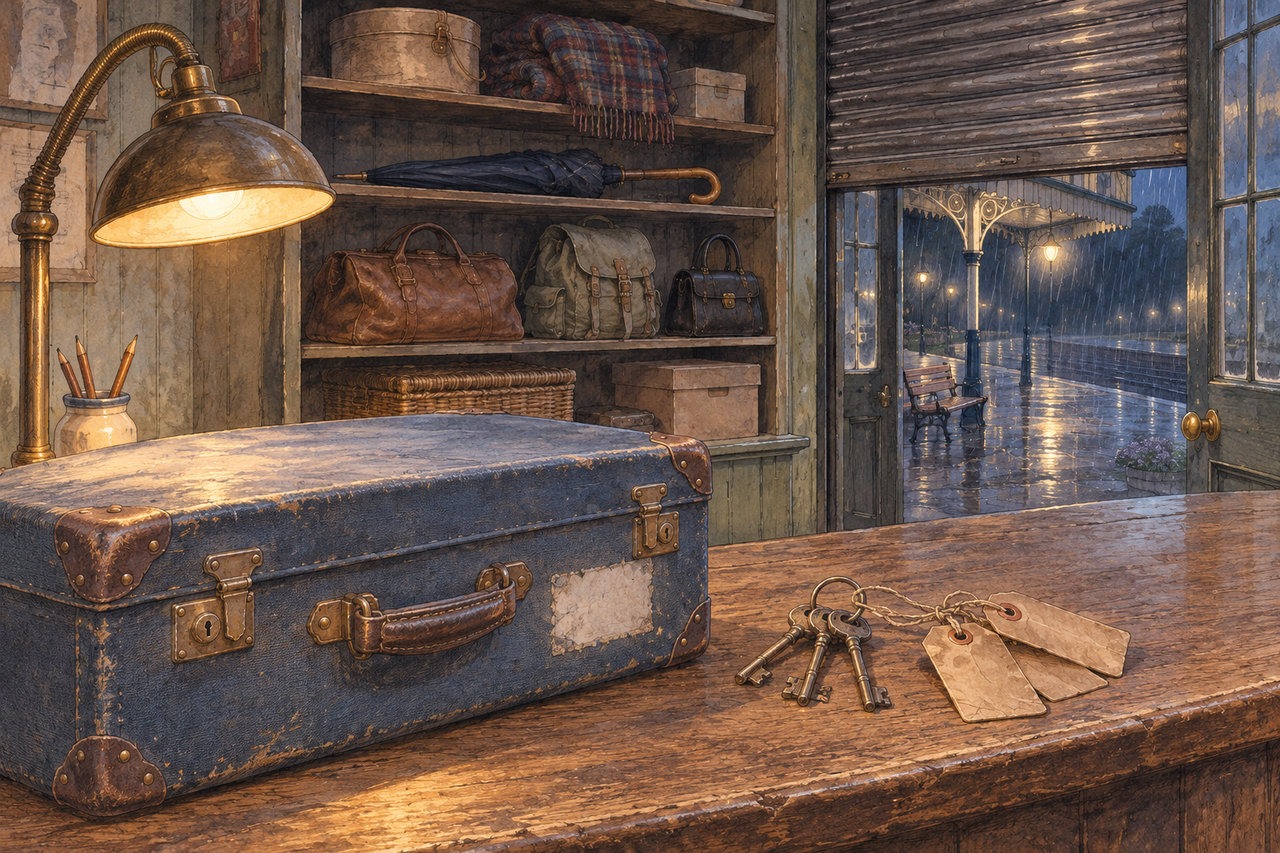
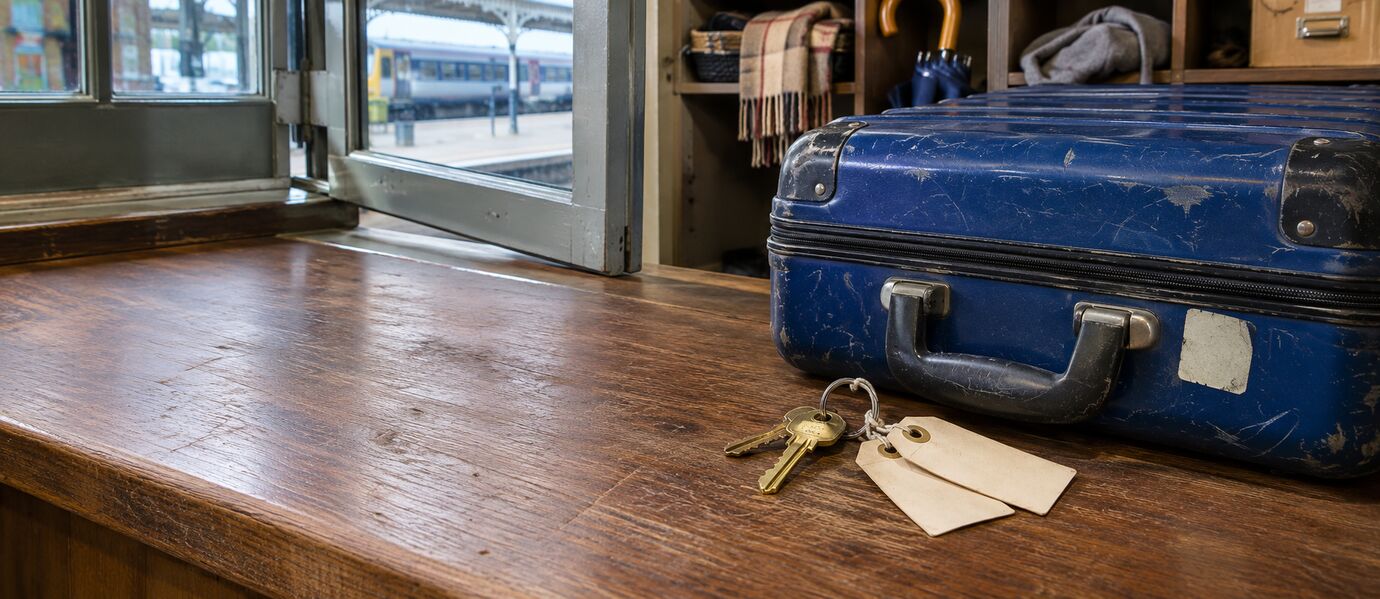
A scuffed blue suitcase and a set of keys with paper tags sit on the station’s lost-property counter.

In the AQA sample question, the prompt asks you to describe a zoo or wildlife park. You can use details from the picture or imagine your own park.

Look at the example picture below. It shows the lost-property office at a railway station just before closing. The keys on the counter and the blue suitcase beside them give you two different ways into the practice tasks.

A blue suitcase with a pale sticker mark and a ring of labelled keys on a counter beside a rain-soaked station platform.
The lost-property office at closing time.

For a description

Describe the lost-property office at a railway station just before it closes.

If the ring of keys catches your eye, try the description. Imagine the last train pulling away. What small sound could you hear in the office once it had gone?

For a story opening

Write the opening of a story in which someone returns for something they have lost.

If you’re wondering who left the blue suitcase, try the story. Imagine Maya, the assistant on duty in the lost-property office. She’s about to lock up when someone knocks.

Once you’ve read both prompts, choose the one that gives you the clearest idea. Then jot down three notes. For a description, decide what the reader will notice first, next and last. For a story opening, decide what your character is doing, what interrupts them and how they react.

Make a three-step plan before you write

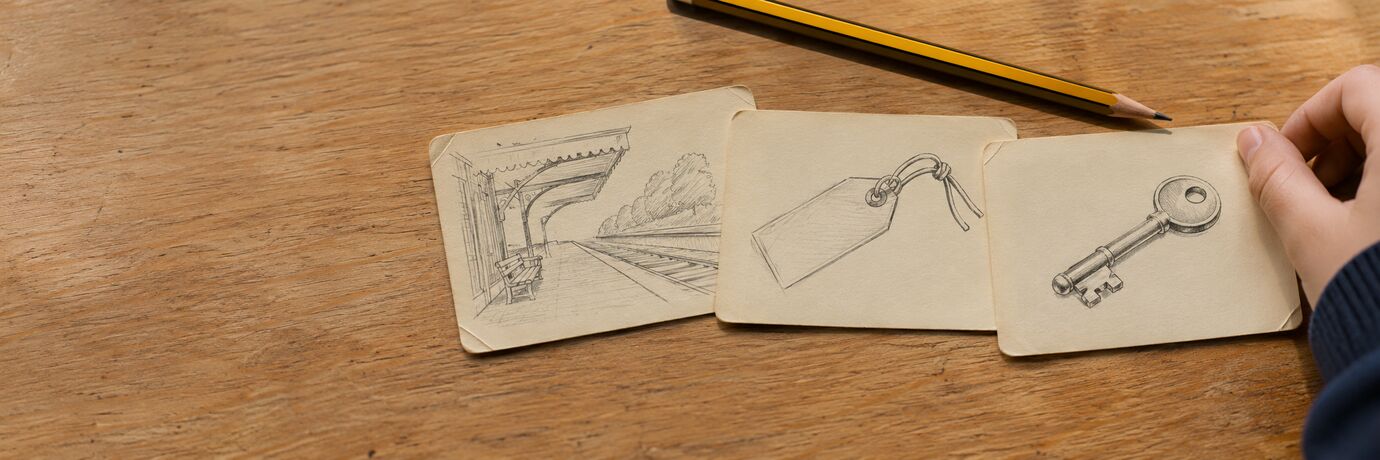
Three sketch cards show a station platform, a paper tag and a key, in that order.

Write your plan in a few words. For the description, start with the platform, then follow a draught into the office until you can hear a single key. For the story, start with Maya closing up. What could the visitor say to make her stop and pick up the case?

A plan for the description

  1. Start with the platform

    Rain hisses on the platform. The last train pulls away.

  2. Move to the counter

    A draught lifts the paper tags tied to a ring of keys on the counter.

  3. Finish on one sound

    One brass key taps the wood once, then lies still.

A plan for the story opening

  1. Give Maya a job

    Maya is lowering the shutter at the end of her shift.

  2. Interrupt her

    A woman knocks and describes the sticker mark on her blue case.

  3. Leave a question

    Maya lifts the case. A thud inside makes the woman step back.

Now read the example for the plan you chose. The lost-property office description follows the draught from the platform to the counter. In Maya’s story opening, look for the detail that persuades her to lift the case.

The lost-property office description

A brass key with a paper tag rests on a wooden counter beside a rain-soaked platform.

Imagine you’re standing inside the office, looking out through the shutter. The first note gives you the opening sentence. As you read on, see where the draught brings the second note into the scene, and listen for the sound in the third.

Rain hissed along the platform as the last train pulled away. Its tail lights dwindled to two red pinpricks, then disappeared round the bend. A draught slipped under the half-lowered shutter and lifted the paper tags tied to a ring of keys on the counter. One tag turned over, showing the words ‘Front door’ in faded blue ink. As the tag settled, a brass key rocked against the wood with one soft tap. Then it lay still.

Follow the movement. The first two sentences keep us on the platform until the train disappears. The draught then slips under the shutter and lifts the tags on the counter. It gives the reader a reason to move from the wide view in the first note to the close-up in the second.

Listen to the ending. The third note promises a sound and then stillness. You can hear the sound in “one soft tap”. Try reading the paragraph aloud with and without its last sentence, “Then it lay still.” Which ending makes you pause and listen?

Maya’s story opening

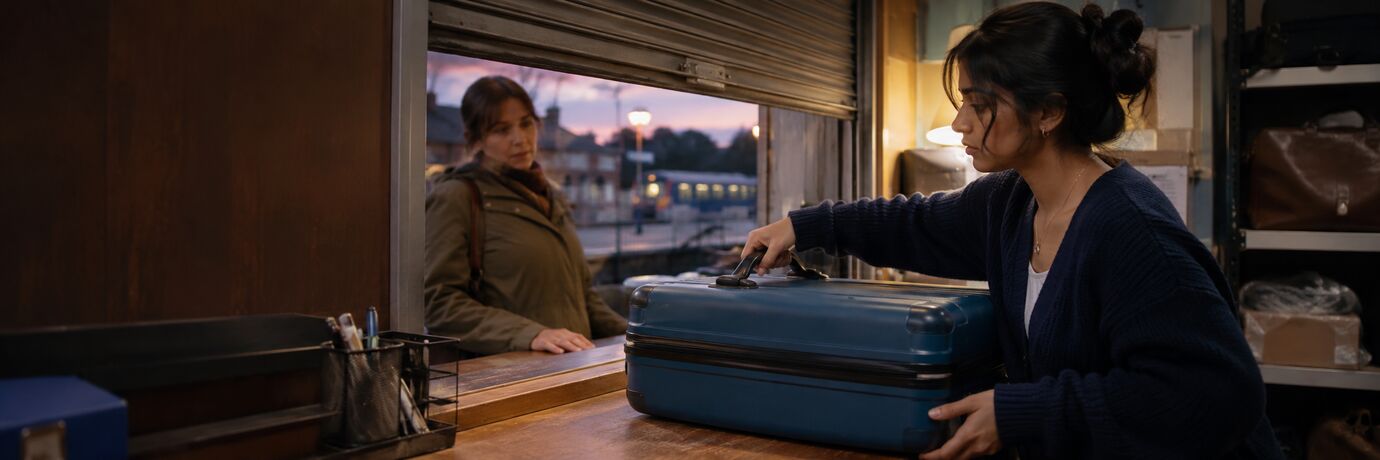
Maya holds the blue suitcase while a visitor waits on the other side of the lost-property hatch.

Maya wants to get home. The woman at the shutter wants her case back. With those two people in place, you can start at the knock and stay with Maya while she decides whether she believes the visitor.

Maya was lowering the shutter when a woman in a dripping coat knocked on the frame. ‘My case,’ the woman said. ‘Blue, with a pale square by the handle where my sticker used to be.’ Maya glanced at the handle. There was the square, facing her side of the counter. From the platform the woman could see only the back of the case. Maya lifted it. Something inside slid from one end to the other with a dull thud. The woman stepped back from the counter.

Give the detail a job. The woman knows about a sticker mark she can’t see from the platform. That gives Maya a reason to believe her and lift the case. If the woman had only mentioned the colour, Maya might have kept the shutter down.

Choose where to stop. The woman has come to collect the case, yet she steps away when she hears the thud. What did she expect to find inside? The opening can end on that question. If you write another paragraph, stay with Maya as she decides whether to undo the catches.

Check your structure and sentence punctuation

A hand marks a handwritten draft with a green pencil.

AQA advises about 45 minutes for Section B, including planning and checking. Question 5 carries 40 marks. The AQA examiner commentary shows how examiners assess content and organisation (24 marks) and technical accuracy (16 marks). Try two short checks.

Read your first and last lines together. For a description, can you trace how the focus moves? For a story opening, what has changed for the character? If there’s a jump, repair the sentence where the link is missing.

Read one sentence at a time. “Maya lifted the case, the woman stepped back” joins two complete sentences with a comma. Try “Maya lifted the case. The woman stepped back.” The full stop gives the reader a beat between Maya’s action and the woman’s reaction. Then check your tense, speech punctuation and spelling.

Try the plan with the umbrella

Set a five-minute timer and choose a different object in the picture, such as the folded umbrella. For a description, follow a drop of water from the handle to the floor. For a story opening, decide who has come back for the umbrella and how they prove it belongs to them. Write three notes, draft your first paragraph and underline the sentence that uses your final note.

Practise Question 5 on a full Paper 1

The AQA GCSE English Language Summary includes separate sections on descriptive and narrative writing, plus a Paper 1 practice paper. To see how the reading section fits alongside the writing task, use our AQA English Language exam overview.

1 Item

Set Descending Direction
  1. Summary

    English Language (AQA)
    £13.99
per page
© 2026 ExamEssentials.co.uk